

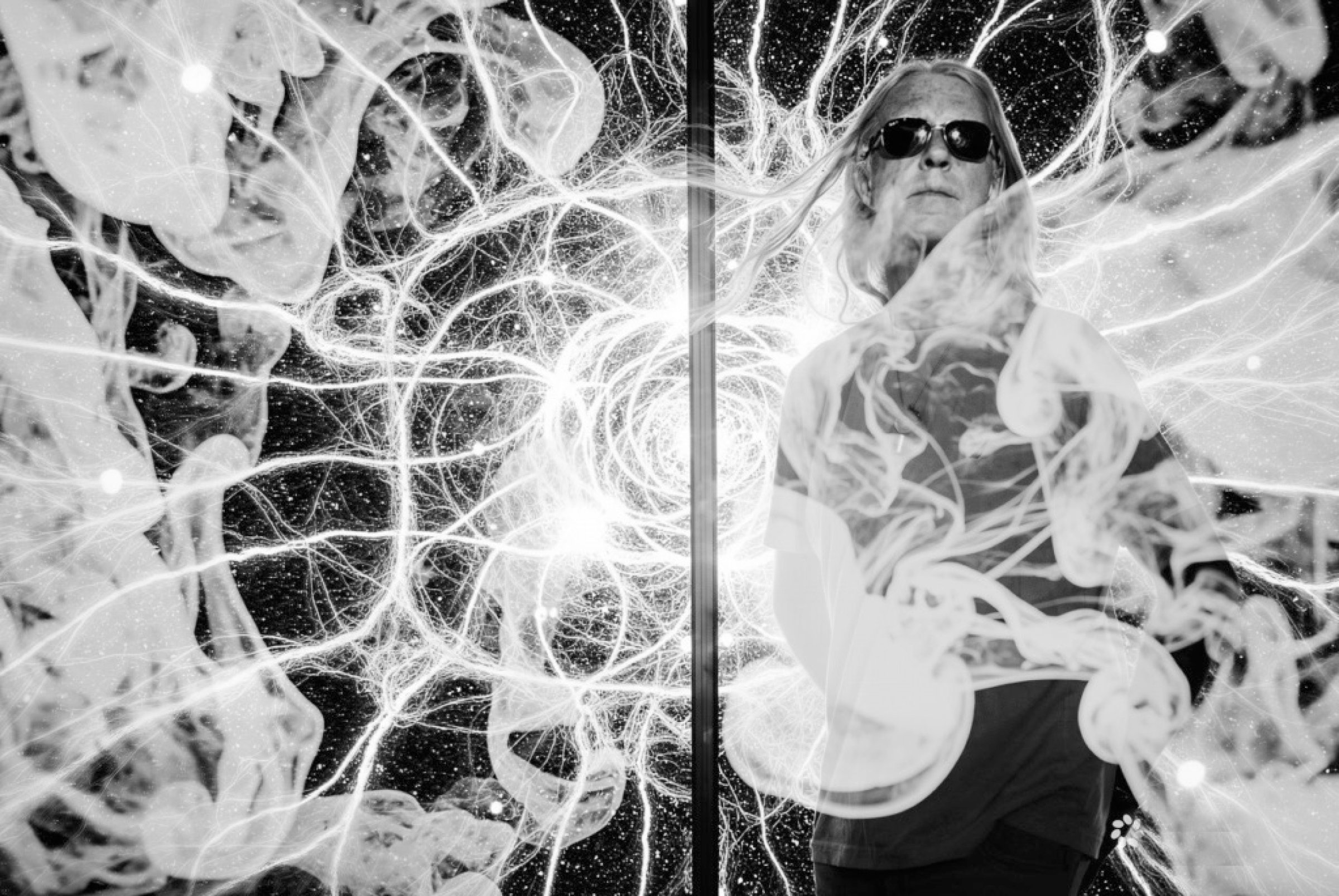
Is Paul Edge decoding something the culture missed, or a visionary standing at the unstable border where art, healing, science, and belief collide?

Is a child fighting for his life in a hospital ward in Limerick, Paul Edge saw a spiral suspended in the air. Not an argument, not yet a system of belief, only a form: luminous, recurring, alive. Decades later, after techno, activism, therapeutic method, speculative research, and the long solitude of inquiry, he still appears to be following that image toward its meaning.
That may be the clearest way to understand him. Not as a DJ who drifted into healing culture, nor as a mystically inclined entrepreneur, but as a figure who has spent a lifetime pursuing one stubborn intuition: that vibration is not simply aesthetic, but causal; that sound does not merely accompany experience, but organizes it.
Through his UK-based night The Outer Limits, widely regarded as one of techno's most influential movements, Edge helped shape rooms where the dancefloor felt less like nightlife than like an instrument. Bodies synchronized. Shame loosened. Strangers entered temporary forms of trust. His sound was techno in its deeper sense: hypnotic, percussive, entraining, an art form with Black roots and ritual force, closer to a contemporary drum circle than to spectacle. For Edge, it posed a question: what exactly was happening in those rooms?
"Innovative, original, pioneer," says British techno icon Colin Dale, who has worked with Edge since the mid-'90s. "One of the heroes of our scene." The phrase matters: even peers recognize Edge's later work as evolution, not retreat.
"In order to ask a question," he says, "the answer must already be in place."
From the outside, his trajectory looks implausibly discontinuous: underground techno giving way to activism, psychotherapeutic frameworks, quantum biology, water research, feminine intelligence, ethical AI. Yet looked at in reverse, the apparent digressions resemble a single fidelity. The nightclub was not the destination. It was the first disclosure.
Edge's own term for what followed is the delta gap: the distance between what the dancefloor could momentarily induce and what a human life can actually sustain. A rave could dissolve inhibition, reorganize feeling, generate belonging. But it could not hold those states. Dawn came. Chemistry faded. The world resumed its familiar fractures. Much of Edge's later work reads as an attempt to close that gap, to understand how temporary transformation might become durable change.
This is where he becomes difficult to classify. A conventional music profile cannot contain him. A wellness profile would trivialize him. Edge stands at a volatile border where art, healing, mysticism, and speculative science contaminate one another. His inquiry into Quantum Cymatics, the study of sound-created patterns in water and his claim that these patterns may carry information, memory, intention, and even communication, does not sit comfortably inside any approved category. Is he a forgotten pioneer decoding something the culture missed, or a visionary standing too close to the edge of legitimacy?
"There is nothing radical in what I propose," Edge says. "The only radical thing I've done is actually listen to ancient knowledge, the feminine, and apply this wisdom scientifically."
The sentence contains both the force and the friction of his project. Skeptics hear metaphysics borrowing the authority of science. Admirers hear an attempt to restore forms of intelligence modernity dismissed—intelligence that arrived through symbol, ritual, intuition, or the body rather than sanctioned institutions. What matters is not that Edge resolves this contradiction, but that he inhabits it without flinching. Edge does not treat ancient knowledge or feminine intelligence as symbolic decoration, but as bodies of wisdom before which modernity has been far less humble than it imagines. His claim is that the feminine is a relational intelligence bound up with water, care, pattern, receptivity, and life itself.
"I guess I just got tired of surrendering to the luxury of pretending not to hear the question," he reflects. What lends his career its peculiar gravity is not merely the ambition, but the attrition required to remain faithful to it. At the height of his influence in techno, he walked away. Relationships ended. Institutional doors closed. He has funded the research himself, years of inquiry with no guarantee of return. Ridicule, scientific dismissiveness, financial consequence, long periods of solitude: these do not sit outside the work, but inside its method, as recurring tests of whether conviction can survive without consensus. And yet the work has begun to produce evidence that cannot be easily dismissed. His immersive water films, visual translations of Quantum Cymatics principles, have shown stress reduction of between 39 and 60 percent after a single hour of exposure. Not testimonials. Outcome studies. The measurements do not erase the cost. Edge's persistence resembles less a career strategy than a form of ordeal. As he puts it with disarming bluntness, "Sometimes it's very lonely being me." And yet the work would risk grandiosity were it not rooted in wound. The childhood illness matters.
The spiral matters. The Shannon matters. So does grief. "In those many moments of loss, I cried," Edge says. "It was in those tears that water comforted and protected me. I knew in that moment we were missing something."
Maybe that is why Edge matters now. Not because obscurity proves genius, but because he seems to register a cultural shift before the culture can name it. Art is now expected to heal. Science keeps edging toward experiences it cannot fully explain, while belief seeks forms of embodiment that do not require surrendering intelligence.
Perhaps Paul Edge is neither simply a forgotten pioneer nor merely a visionary. Perhaps he is something more unsettling: an early signal from a future still arriving, carrying evidence from a border where our categories no longer hold. The spiral has returned, no longer hovering in a hospital room, but moving through water, visible, measurable, alive.

COLLECTION
Artist: Paul Edge X Water | @quantumcymatics | @ Paul Edge 2026
THE BEAUTY
OF HEBREW
For Paul Edge, the 22 Hebrew letters hold a profound resonance and healing power. Following an encounter with Kabbalists, he began exploring the vibrational relationships within this ancient language to create art forms that help restore coherence and return people to a sense of wholeness. The artwork on the next page is just one example of many emerging from his extensive research—serving as a living laboratory where his exploration of frequency, ancient wisdom, and human restoration takes visual and sonic form.
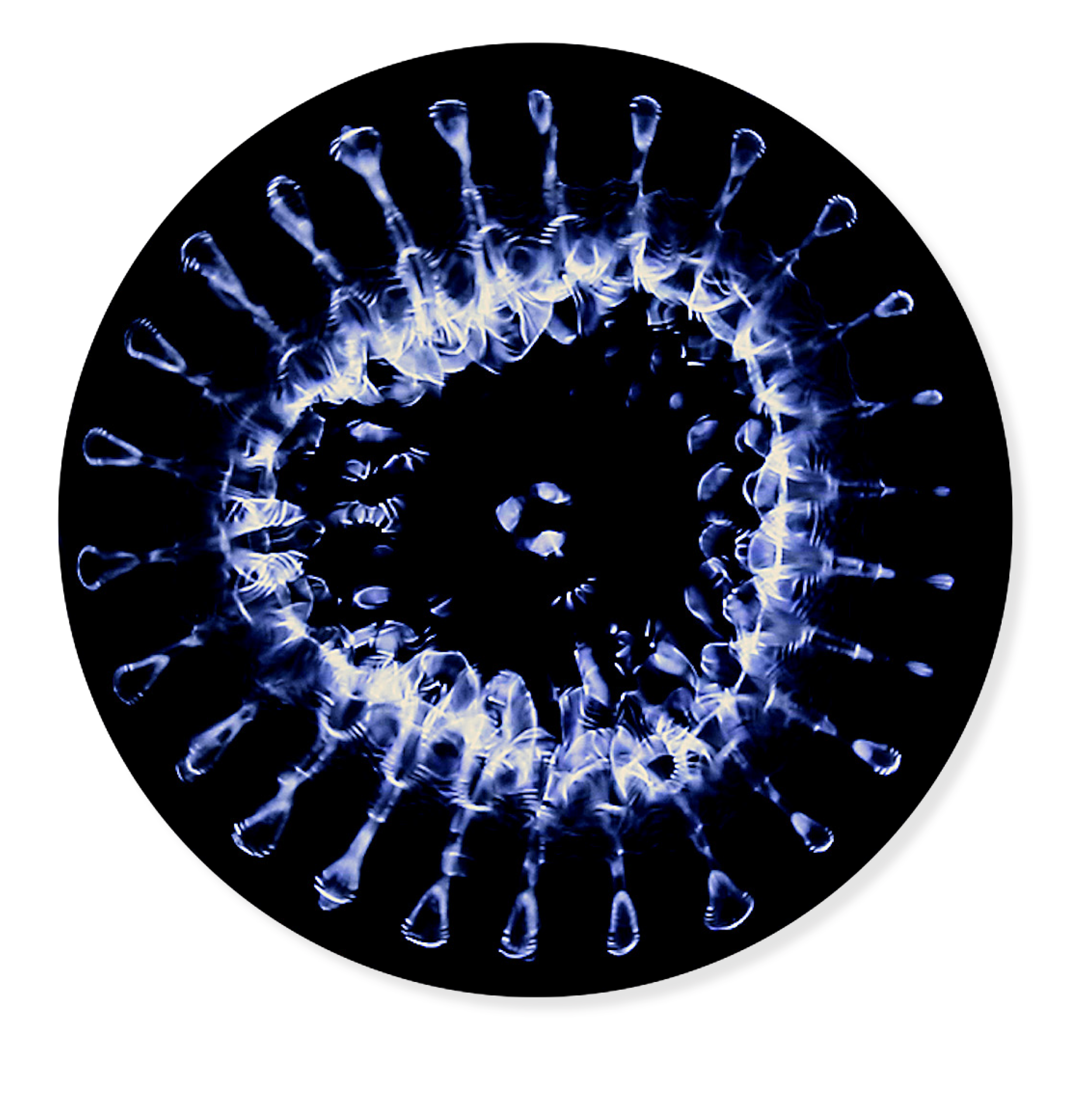
Artist: Paul Edge and Water
Title: Hebrew spoken by Odeya
Medium: Canvas
Year: 2026
@quantumcymatics

Read Digital Edition | Purchase Physical Edition
ISSUE 29 AVAILABLE









Quisque iaculis facilisis lacinia. Mauris euismod pellentesque tellus sit amet mollis.