
ARCHITECTURE BEYOND BOUNDARIES
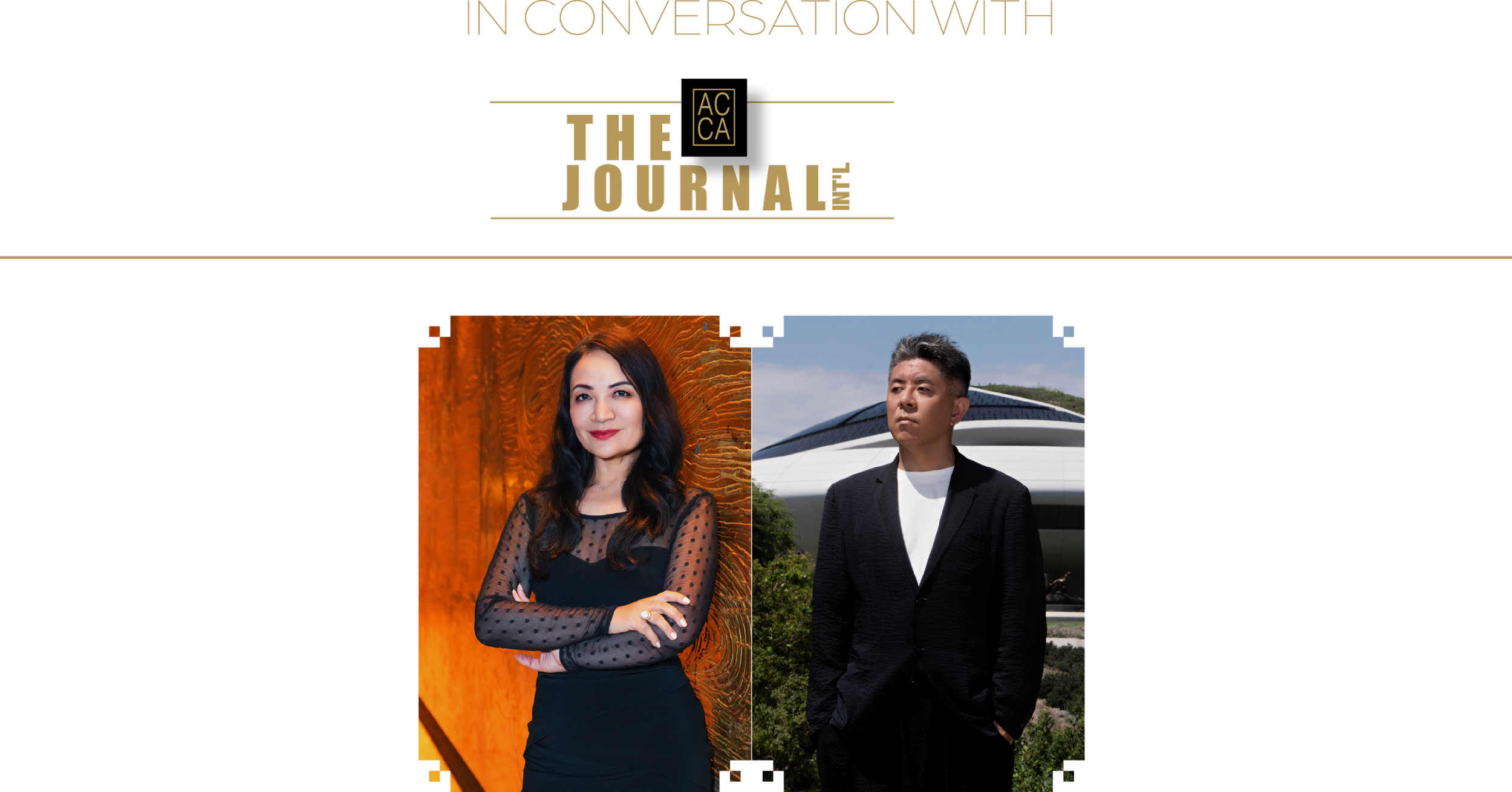
In Conversation with Maya Ito, ACCA Journal Chief Editor, and Ma Yansong, Founder of MAD Architects
Q1. First, congratulations on the opening of the Lucas Museum of Narrative Art, and thank you for speaking with ACCA Journal. What impression did George Lucas make on you during your collaboration? Which of his films is your personal favorite?
George has a very strong imagination. He also thinks deeply about how people will experience the museum. We talked about making it a place where the public, especially young people, could come together and discover things for themselves.
There is a connection with his films that he didn’t know about. In 2005, when I was designing the Ordos Museum, images from Star Wars came into my mind. I imagined a spacecraft landing in the desert. Years later, I asked George why he had chosen us. He said he had seen the Ordos Museum and found it interesting. I had never told him where part of that image came from.
Q2. Some people see the Lucas Museum as a cloud; others think it resembles a ship. Did you have a particular image in mind when you began designing it?
I like that people see different things. I didn’t begin with an image of a cloud or a ship. I wanted to leave room for imagination.
Los Angeles has the mountains, the ocean and an openness that is quite different from other cities. I wanted the museum to belong to that setting. We lifted the building so people could move through the landscape beneath it. The trees and the park are part of the experience, not just a setting around the museum.
Q3. Zaha Hadid Architects was among the firms that competed for the museum commission. What do you think most persuaded the client to choose MAD’s proposal?
George can answer that better than I can. I asked him once why he chose us, and he said he had seen the Ordos Museum and found it interesting. That surprised me. It was a project that came from my own imagination of the future.
For the Lucas Museum, I wanted people to be curious about what was inside. As you approach, you also find space open to the park and to other people. I think George responded to that sense of discovery.
Q4. The Lucas Museum took eight years to move from its initial conception to opening. Looking back, which stage surprised or delighted you most? And what challenges made the process difficult?
I remember walking the site with George when it was a parking lot. To come back now and see a park, and people walking beneath the building, is very moving. For years you are working with drawings and models. Then suddenly the space has a life of its own.
The difficult part is carrying an idea through a long process. The structure, galleries, landscape and practical needs of the museum all have to work together. We had many problems to solve, but I wanted to keep the feeling of freedom that was there at the beginning.
Q5. You have said that architecture need not be a monument to humanity’s control over nature; it can instead be a fluid landscape connecting emotion, spirit, and the environment. Which aspects of the Lucas Museum best express this idea?
The building does not take over the whole site. It rises above the ground, leaving space for people to walk, meet, find shade or spend time in the park.
Nature is not just scenery outside a building. It can shape the way we live in a city. At the Lucas Museum, the paths, trees, roof garden and changing light are part of the architectural experience. At One River North in Denver, we brought a canyon-like landscape into a residential tower, giving people places to walk, gather and experience nature in their daily lives. The forms are different, but both projects ask how a building can create a closer relationship between people and their surroundings.
Q6. How do the poetic sensibilities of Eastern culture and the narrative traditions of the West come together in the Lucas Museum? How did you make them part of the architecture itself, rather than simply combining them at a visual level?
I don’t design by assigning a cultural identity to different parts of a building. I begin with the place and the people who will use it. Los Angeles has its own geography, public life and openness to new ideas. The museum grew from those conditions and from George’s hope that visitors would feel free to explore.
What interests me is how you move through the place. You arrive from the park, pass under the building, and encounter different spaces, views and light. It is a journey, but I don’t want to tell people what the story is. They can discover the art, the building and one another in their own way.
Q7. Your work often explores the relationship between nature, emotion, and space. How does this interest extend to the interior—for example, in the way artworks are displayed and people experience the space?
The interior is not separate from the building or the park. I think about how someone arrives, how they move, and when they become aware of light, another person, or a view outside. Those moments can change how they feel before they even reach an artwork.
The galleries must give the collection the conditions it needs. But a museum is more than a sequence of rooms holding objects. George and I both believe art can move people. Architecture can create a sense of openness and curiosity, while leaving each person free to respond in their own way.
Q8. From studying in Beijing and at Yale to working in different countries, how have your cross-cultural experiences shaped your architectural language? Amid these influences, what principles have you held on to?
Studying and working in different parts of the world has taught me to look carefully before drawing. A project has to respond to its city, its landscape and the lives people will lead there. I am interested in what architecture can contribute to everyday life, whether it is a museum or a place to live.
A residential project can do more than provide homes. It can change how people see their city and how they experience daily life. The Absolute Towers in Mississauga, near Toronto, gave a growing city a new landmark, while their continuous balconies opened every home to the surrounding views. At Gardenhouse in Beverly Hills, we took inspiration from the homes and landscape of the surrounding hillsides and brought that way of living with nature into the denser urban fabric of the city, creating 18 homes around a shared garden. With Qondesa in Quito, we are bringing planting and outdoor space into a high-rise beside La Carolina Park, while shaping the tower to preserve light and views for its neighbors. These are very different places, but I begin each project with the same question: what can this building give to the people who live there, and to the city around it?




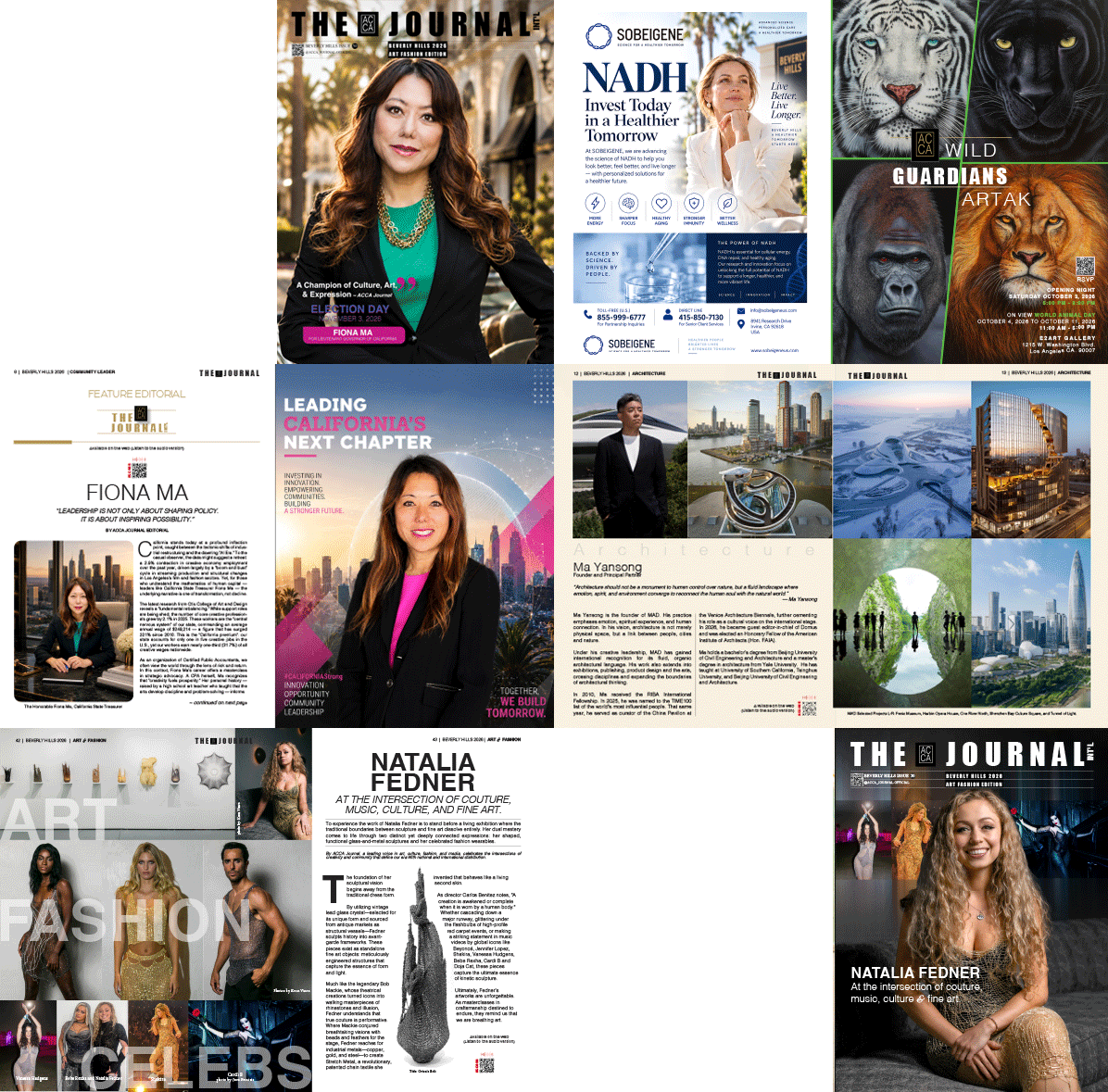
Ma Yansong
Founder and Principal Partner
“Architecture should not be a monument to human control over nature, but a fluid landscape where emotion, spirit, and environment converge to reconnect the human soul with the natural world.” — Ma Yansong
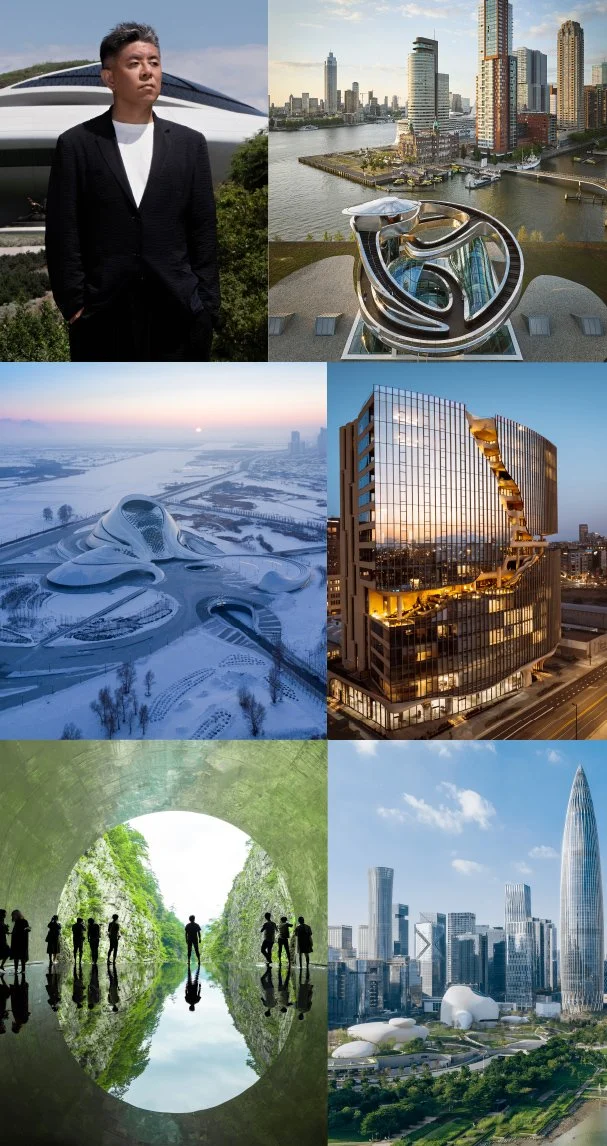
MAD Selected Projects L-R: Fenix Museum, Harbin Opera House, One River North, Shenzhen Bay Culture Square, and Tunnel of Light.
Ma Yansong is the founder of MAD. His practice emphases emotion, spiritual experience, and human connection. In his vision, architecture is not merely physical space, but a link between people, cities and nature.
Under his creative leadership, MAD has gained international recognition for its fluid, organic architectural language. His work also extends into exhibitions, publishing, product design and the arts, crossing disciplines and expanding the boundaries of architectural thinking.
In 2010, Ma received the RIBA International Fellowship. In 2025, he was named to the TIME100 list of the world’s most influential people. That same year, he served as curator of the China Pavilion at the Venice Architecture Biennale, further cementing his role as a cultural voice on the international stage. In 2026, he became guest editor-in-chief of Domus and was elected an Honorary Fellow of the American Institute of Architects (Hon. FAIA).
Ma holds a bachelor’s degree from Beijing University of Civil Engineering and Architecture and a master’s degree in architecture from Yale University. He has taught at University of Southern California, Tsinghua University, and Beijing University of Civil Engineering and Architecture.

Read Digital Edition | Purchase Physical Edition
ISSUE 30 AVAILABLE



Quisque iaculis facilisis lacinia. Mauris euismod pellentesque tellus sit amet mollis.