
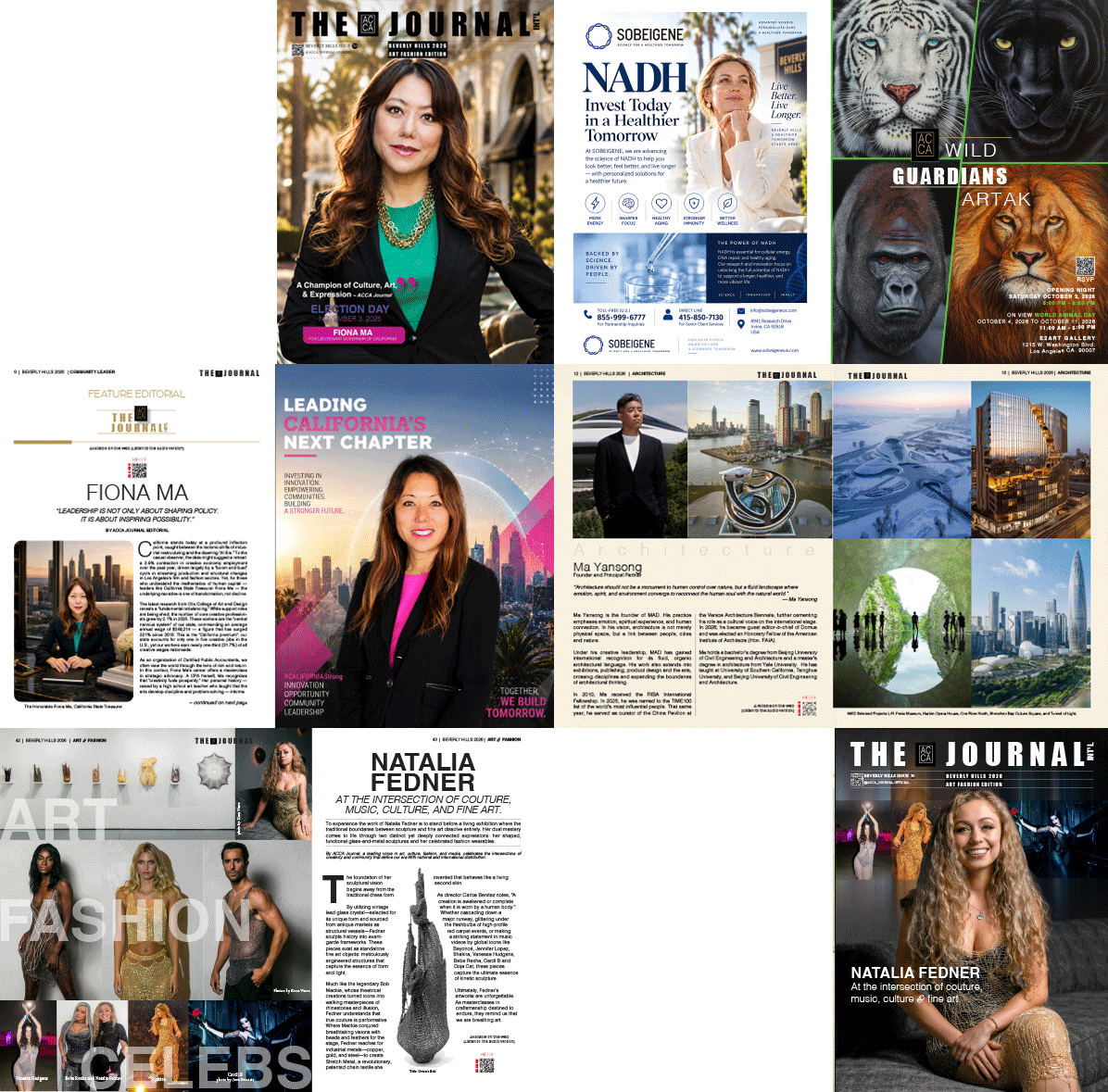
California stands today at a profound inflection point, caught between the tectonic shifts of industrial restructuring and the dawning "AI Era." To the casual observer, the data might suggest a retreat: a 2.9% contraction in creative economy employment over the past year, driven largely by a "boom and bust" cycle in streaming production and structural changes in Los Angeles's film and fashion sectors. Yet, for those who understand the mathematics of human capital — leaders like California State Treasurer Fiona Ma — the underlying narrative is one of transformation, not decline.
The latest research from Otis College of Art and Design reveals a "fundamental rebalancing." While support roles are being shed, the number of core creative professionals grew by 2.1% in 2025. These workers are the "central nervous system" of our state, commanding an average annual wage of $249,214 — a figure that has surged 221% since 2010. This is the "California premium": our state accounts for only one in five creative jobs in the U.S., yet our workers earn nearly one-third (31.7%) of all creative wages nationwide.
As an organization of Certified Public Accountants, we often view the world through the lens of risk and return. In this context, Fiona Ma's career offers a masterclass in strategic advocacy. A CPA herself, Ma recognizes that "creativity fuels prosperity." Her personal history — raised by a high school art teacher who taught that the arts develop discipline and problem-solving — informs her belief that culture is not a luxury; it is an investment. Through the California Creative Finance Network, she has bridged the gap between traditional capital and independent makers, ensuring that the "soul of the city" has the liquidity it needs to thrive.
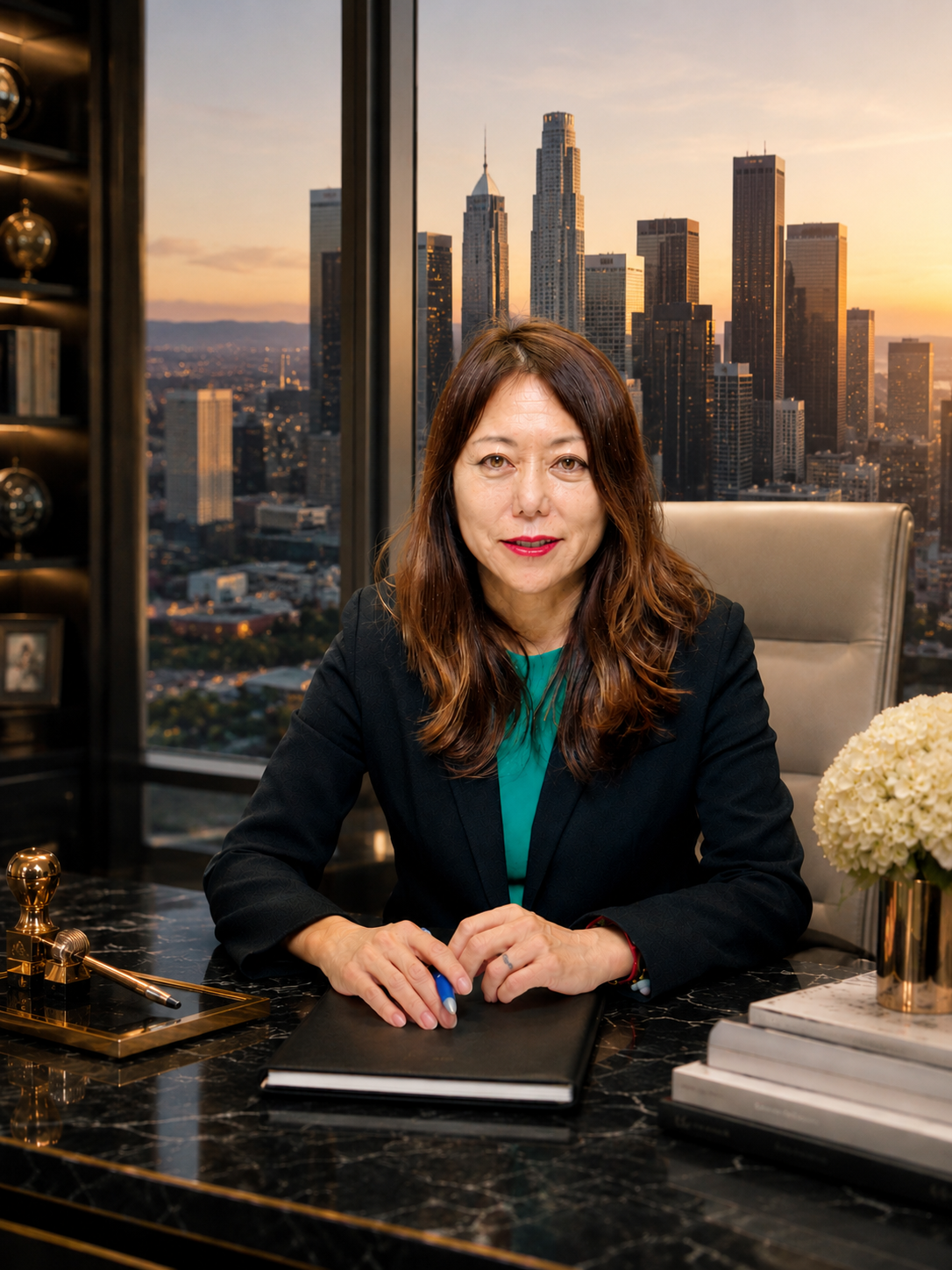
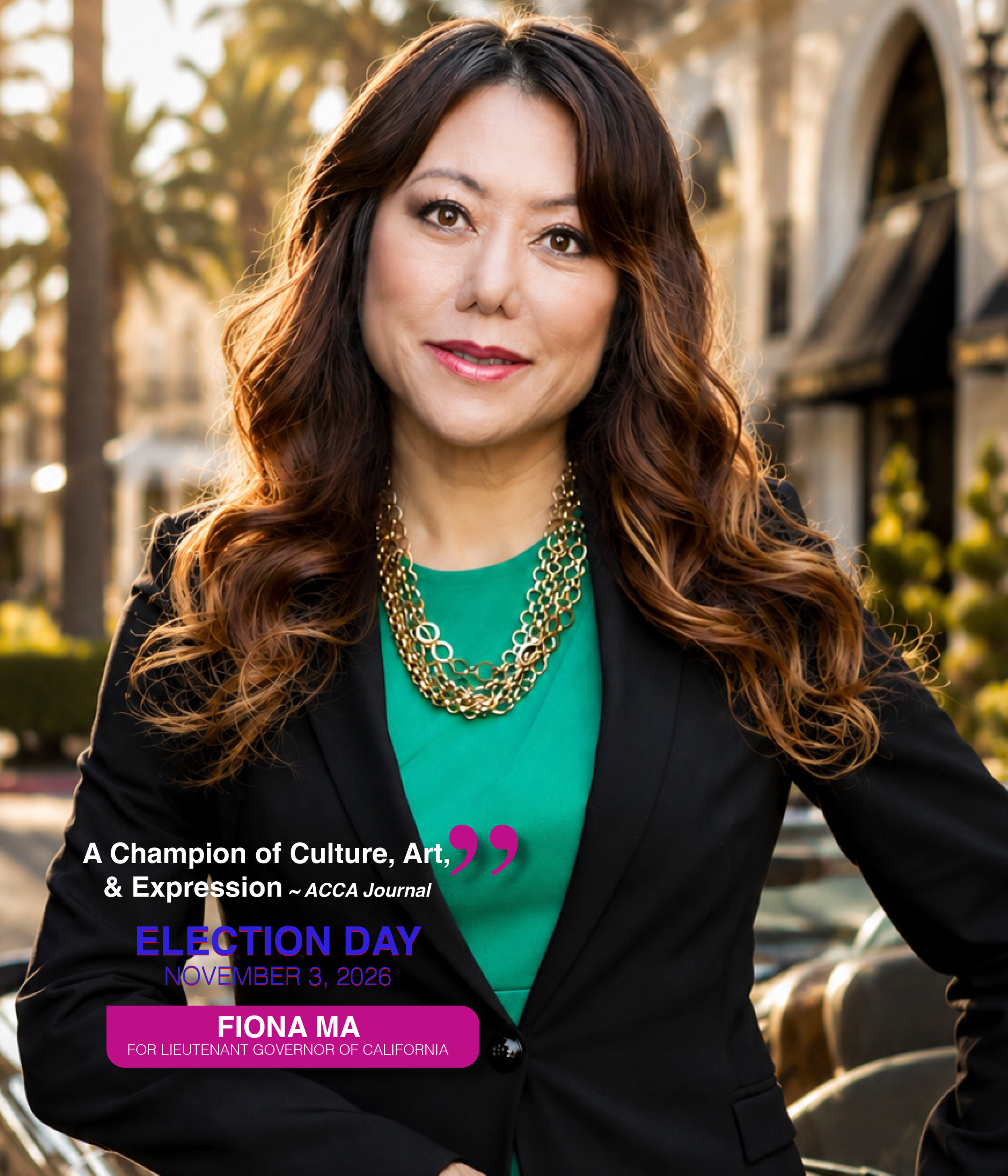
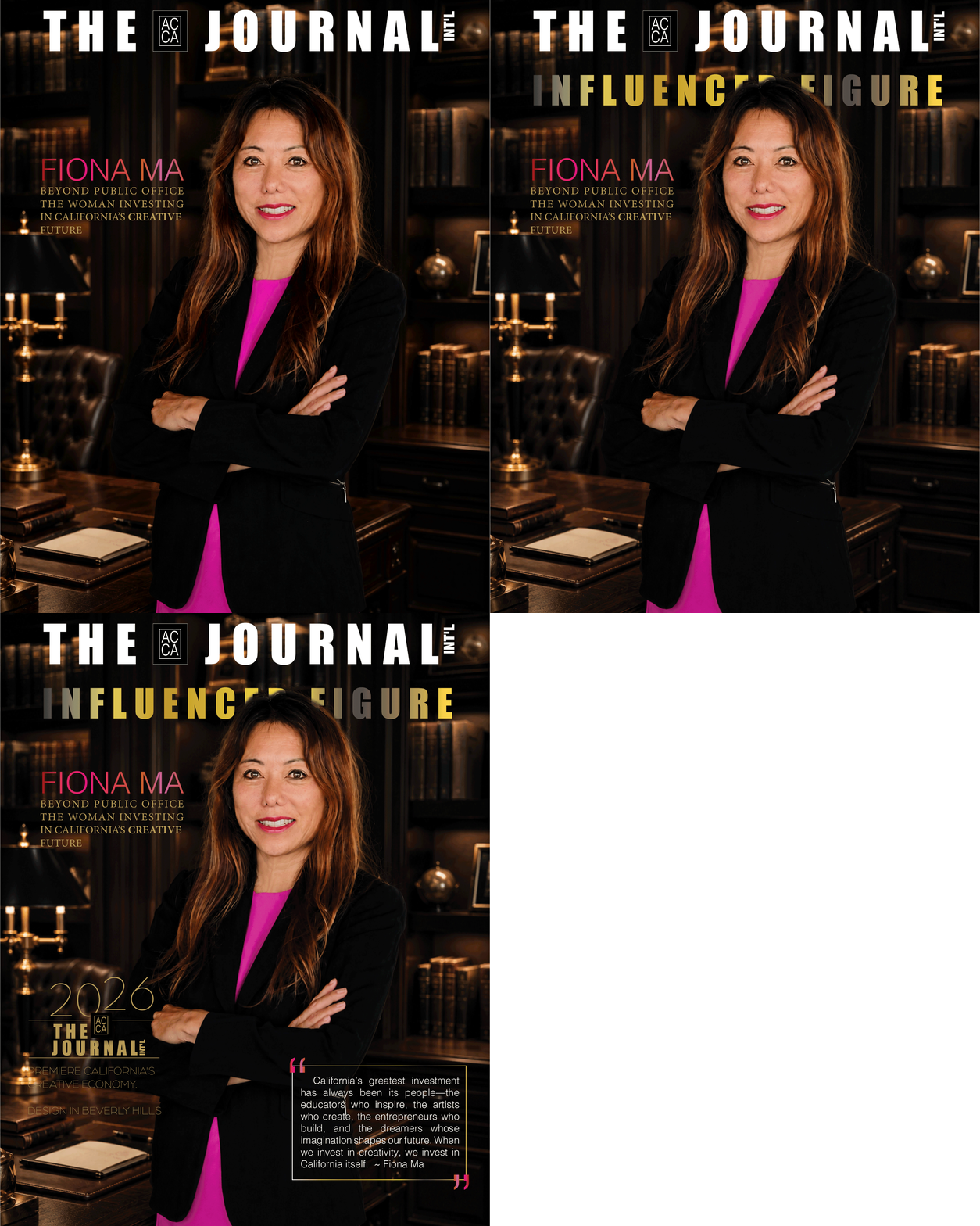
The Honorable Fiona Ma, California State Treasurer
The current anxiety surrounding Artificial Intelligence serves as a vital case study in this intersection of finance and art. While headlines frame AI as a job-killer, the Otis College report finds it is not the primary driver of job losses. Instead, AI is "replacing tasks, not workers." It handles the convergent work — rotoscoping, footage logging, transcription — while creating a new "automation tax" in the form of human supervision and quality control. The real displacement is being driven by California-specific cost pressures and "industry restructuring," not algorithms.
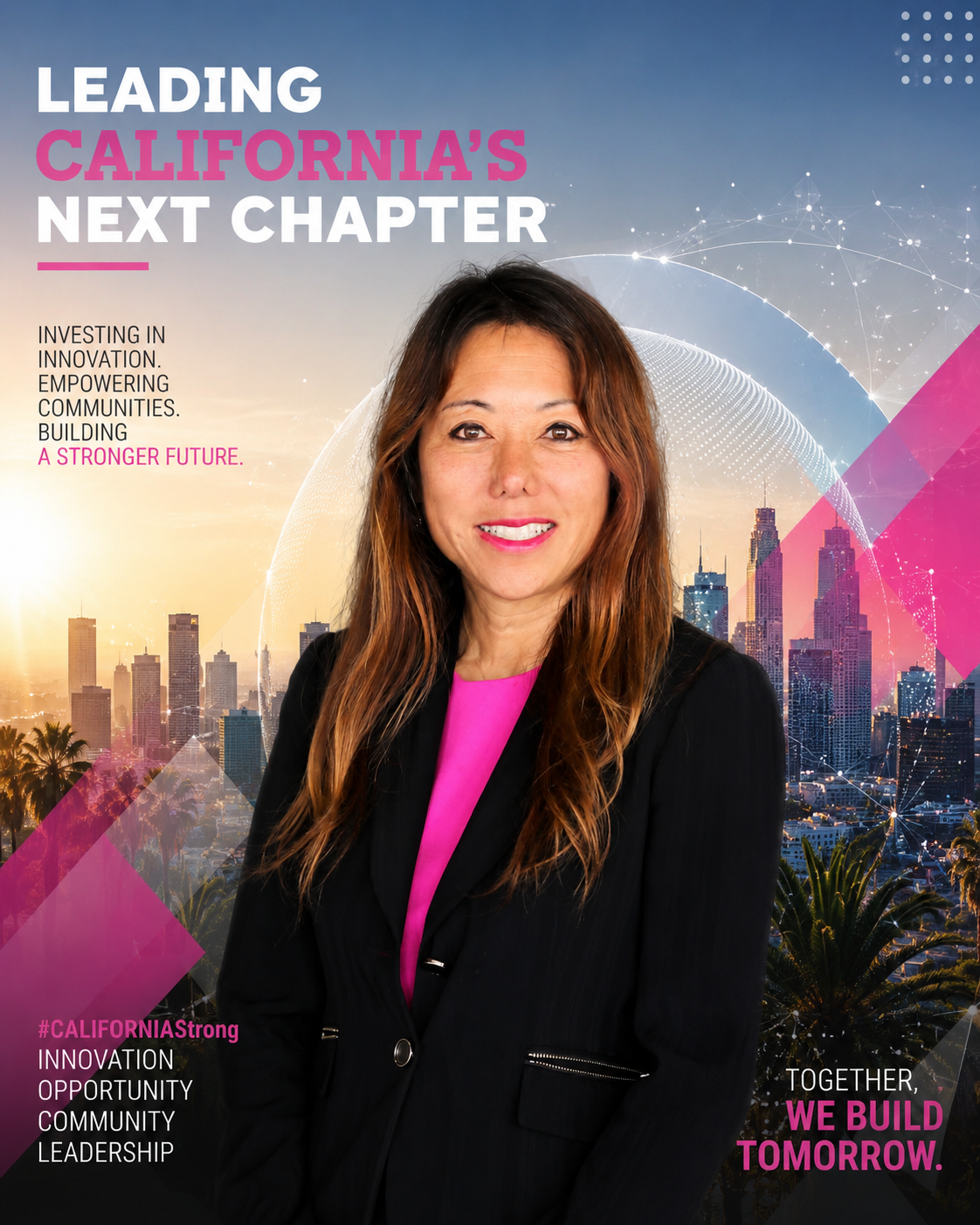
Treasurer Ma's vision for California's Next Chapter is built on this very distinction. She understands that our competitive advantage is not just technology, but the people who inspire. By co-sponsoring the state's first Film and Television Tax Credit in 2009 and continuing to advocate for its expansion in 2025, she has worked to protect the middle-class jobs that form the bedrock of our creative ecosystem.
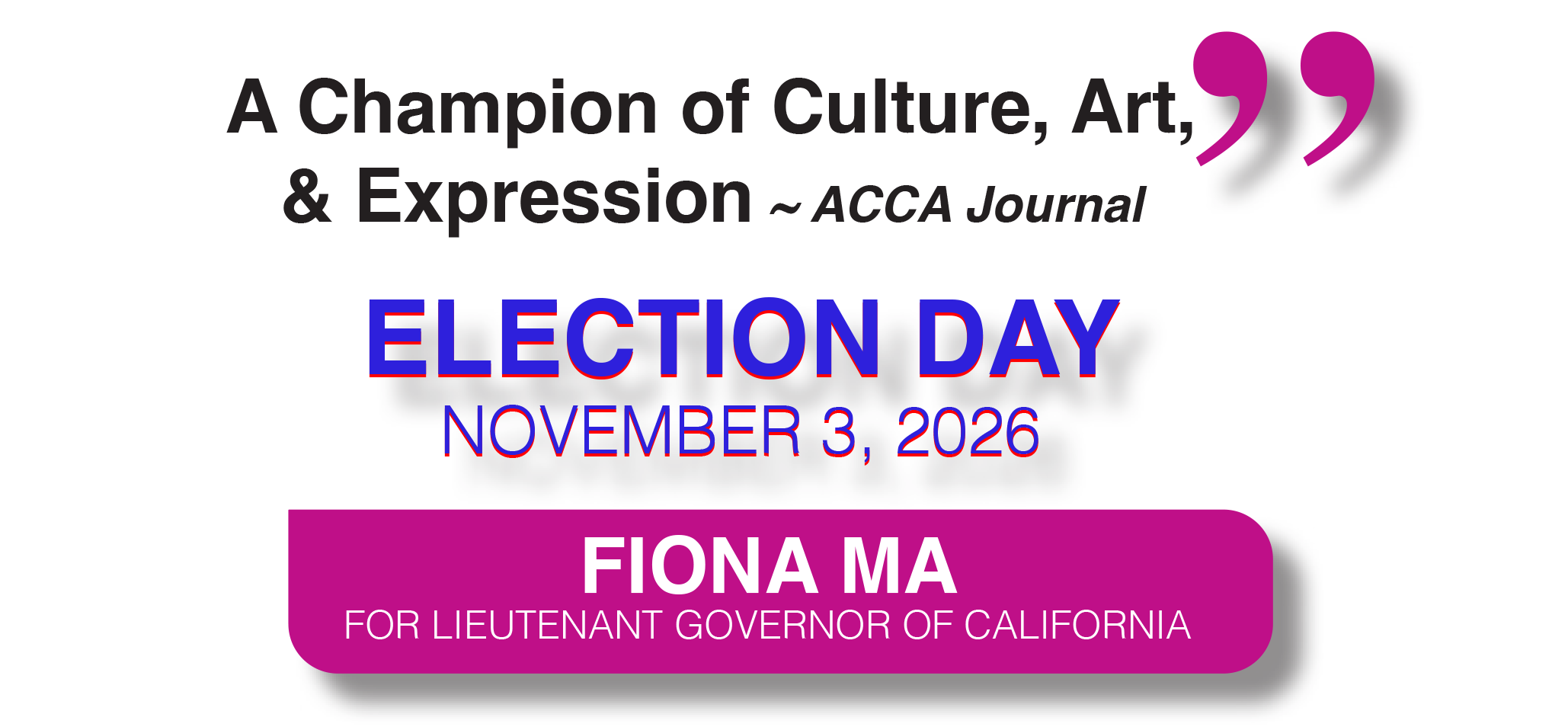
As we look toward the 2026 Lieutenant Governor election, the message for the ACCA community is clear: Leadership is about inspiring possibility. We must move beyond simply adopting policies to actively investing in the "dreamers whose imagination shapes tomorrow." California remains the world's leading center of innovation not because of its institutions, but because it is home to a workforce that can bridge the "context gap" that machines cannot reach.
Culture, in the vision of Fiona Ma, is not a luxury. It is a blue-chip investment in the people who define our state's identity and its prosperity.

Credits:
• Lead Editorial Writer: ACCA JOURNAL EDITORIAL
• The Honorable Fiona Ma, California State Treasurer
• Research & Data: Otis College of Art and Design; Westwood Economics and Planning Associates (Patrick Adler and Taner Osman)
Supporting Institutions: Snap Foundation, California Community Foundation, and Sony Pictures Entertainment
www.otis.edu/about/initiatives/creative-economy/dashboard.html

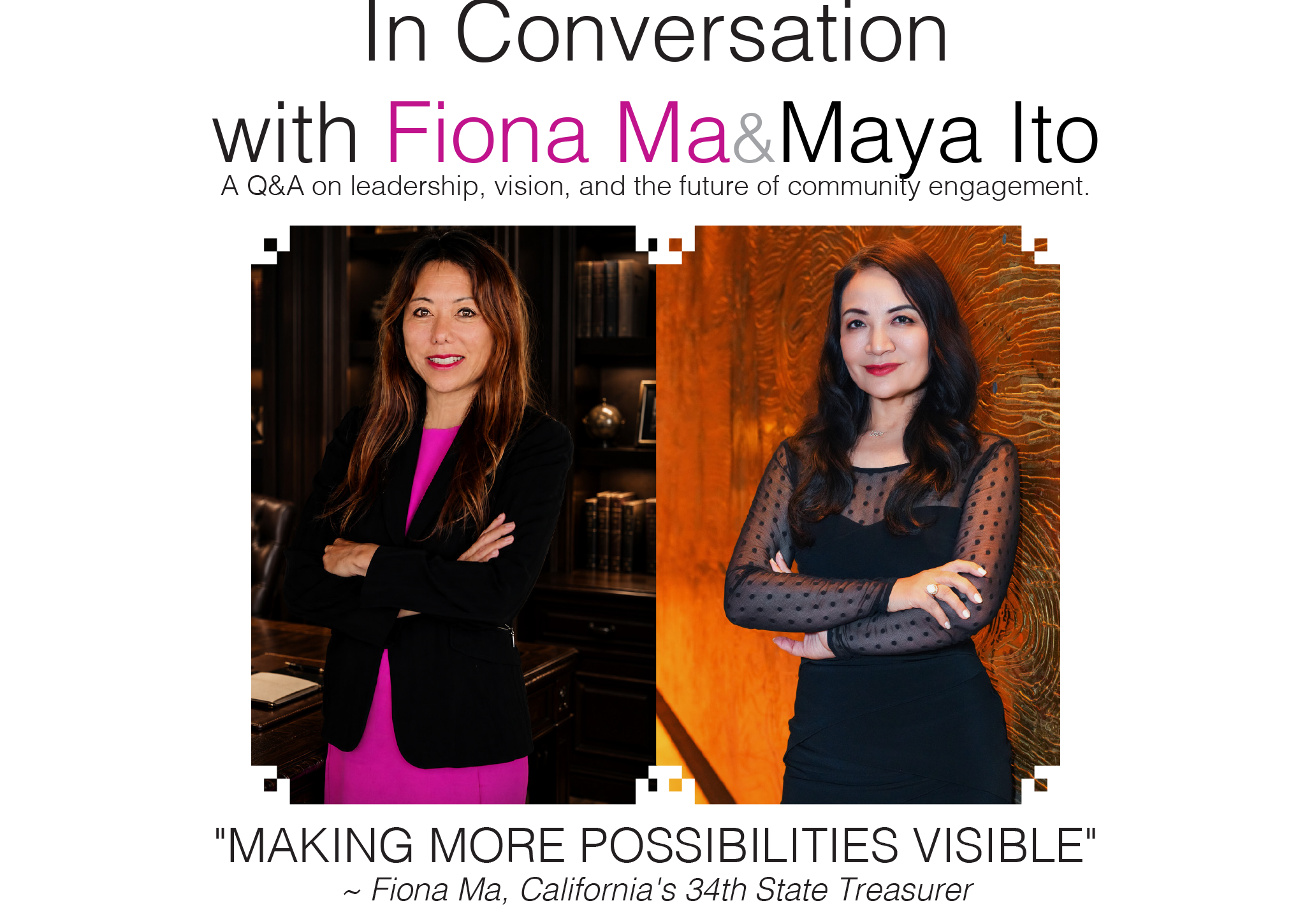
Fiona Ma is a public affairs leader, certified public accountant, and political figure whose Chinese immigrant background has shaped her commitment to public service. She previously served in the California State Assembly and as a member and chair of the California Board of Equalization before being elected California State Treasurer in 2018.
In 2026, she is running for Lieutenant Governor of California. In this special interview, Ma reflects on her professional journey, leadership, and the wins she has delivered for constituents, while also discussing film, fashion, cultural identity, and the life choices that have shaped her path.

Maya Ito Your parents began their married life with approximately $3,000, most of it from your father’s savings. How did your family background influence your upbringing and life choices?
Fiona Ma They built their family from the ground up, and I grew up witnessing the importance of hard work, frugality, and responsibility. As a child, I helped my father organize financial records, pay bills, and prepare tax documents. Later, he taught me about investing, which gradually helped me understand how to manage money. These experiences taught me that opportunities cannot be taken for granted. After achieving success, we should also help create opportunities for others.
Maya Ito You moved from working as an accountant and entrepreneur to public service. What inspired that change in direction?
Fiona Ma Accounting taught me to pay attention to detail, numbers, and responsibility. Running my own business helped me understand the practical pressures faced by companies and families. Public service gave me the opportunity to address broader social issues.
I entered public service because I gradually realized that many challenges cannot be solved through individual effort alone. Institutions and public policy also have a significant impact on people’s lives.
Although these experiences may appear different, they all require honesty, sound judgment, and a sense of responsibility toward others.
Maya Ito As California’s 34th State Treasurer, you oversee an extraordinary amount of capital for the world’s fourth-largest economy. How do you view the concept of stewardship in managing public funds?
Fiona Ma My office processes approximately $3 trillion in annual banking transactions and oversees an investment portfolio averaging around $165 billion, financing schools, housing, roads, and hospitals. But public money isn't created in Sacramento—it’s earned by people showing up to work, paying taxes, and running businesses. There is a fundamental difference between ownership and stewardship. Ownership says, "This is mine." Stewardship says, "This has been entrusted to me." Public finance is ultimately less about money than it is about trust—an asset that takes decades to build and moments to lose.
Maya Ito Have characters or stories in films influenced the way you view life, society, or other cultures?
Fiona Ma Films allow us to enter lives that may be very different from our own. Through a character, we can understand the circumstances of another family; through a story, we can learn about a different culture. Films have also helped me understand that although people’s experiences may differ, their emotions and hopes are often deeply connected. This perspective is also valuable in public service, because behind every policy are real people and families.
Maya Ito As a member of a multicultural society, how do you view the relationship between art, fashion, and cultural identity?
Fiona Ma Art and fashion can both serve as expressions of cultural identity. A person may inherit traditions from their family while also being shaped by the city where they grow up, their education, and their life experiences. Cultural identity is not fixed; it continues to develop over time.
Fashion can preserve traditional elements while incorporating modern design. It allows people to express themselves and gives different cultures the opportunity to be seen and understood.
Maya Ito How would you describe your personal style? What do you consider most important when choosing what to wear in public?
Fiona Ma My personal style changes depending on the occasion, the nature of my work, and my mood. However, I always want my clothing to make me feel confident, comfortable, and appropriately dressed.
In public settings, clothing should convey professionalism, but professionalism does not mean giving up individuality. Colors, tailoring, and accessories can all express a person’s cultural background and personality. I believe fashion should help people express themselves rather than become a constraint.
Maya Ito Looking back on your journey, how do you hope the next generation will understand success and life choices?
Fiona Ma I hope the next generation will not define success according to a single standard.
Success may mean building a career, serving the community, caring for a family, pursuing art or knowledge, or living according to one’s values. Everyone should have the opportunity to find a path that is right for them. My parents built their lives in the United States and they gave me more than material support—they gave me education, a sense of responsibility, and confidence in the future. I hope to pass those values on and help more people have the opportunity to express themselves and create their own futures.
Maya Ito When you look beyond the titles, campaign signs, and balance sheets, what do you hope endures from your public service?
Fiona Ma Every public office is temporary. A balance sheet tells us what we possess, a resume tells us what we’ve accomplished, and a title tells the world what to call us—but there is another ledger that asks harder questions. Whose future became more possible because you were here? What door did you hold open? Money has never been what gives my life meaning; helping people does. In the end, the true measure of a life comes back to that family checkbook: taking the opportunity you were given and passing forward a better future for others.

Read Digital Edition | Purchase Physical Edition
ISSUE 30 AVAILABLE





Quisque iaculis facilisis lacinia. Mauris euismod pellentesque tellus sit amet mollis.